
cattle ranch cost segregation
Cattle Ranch Cost Segregation: Asset Classification, Basis Rules, and Tax Strategy
Cattle ranch cost segregation identifies which parts of a ranch’s purchase price or construction cost belong to depreciable improvements, and which recovery period each improvement carries. The first question is how much of the cost belongs to depreciable assets rather than land. The second is whether a study will actually change the owner’s deductions, because many ranch improvements already qualify for 100% bonus depreciation without one.
Key Takeaways
- Land never depreciates, so the analysis begins by separating raw acreage value from the structures, fences, water systems, and equipment that support livestock operations.
- Ranch improvements carry different recovery periods based on function and use. Agricultural fences, qualifying single-purpose livestock structures, livestock water wells, drainage facilities, and general-purpose farm buildings are each classified under their own rules.
- For qualified property acquired after January 19, 2025, current law generally allows 100% bonus depreciation under Section 168(k). Each asset must independently qualify, and certain farm elections, or inheriting the ranch, can make bonus depreciation unavailable.
- Because a general-purpose farm building is 20-year property, it may already qualify for 100% bonus depreciation. A study’s value then often comes from basis allocation, look-back corrections, Section 179 eligibility, or recapture planning rather than a larger first-year deduction.
- A larger deduction is only useful if the owner can use it. Basis, at-risk, passive activity, and excess business loss limits can each defer it.
- Basis depends on how the ranch was acquired (purchase, inheritance, or construction). Review settlement statements and ownership records before any study is finalized, and revisit depreciation schedules whenever assets are acquired, sold, converted, leased, or changed in use.
Fencing, livestock-handling areas, water systems, and agricultural structures may receive different tax treatment based on function, construction, and use. Classification is fact-specific; a shorter recovery period alone does not establish eligibility for a particular deduction.
Cattle Ranch Cost Segregation: What It Is and Where the Deductions Actually Come From
A cost segregation study analyzes a ranch’s depreciable basis and assigns eligible components to appropriate tax classifications and recovery periods. It does not make grazing land depreciable or create new basis. Its potential benefits come from documenting what each improvement is, what it cost, and how the tax rules treat it.
Accelerating Depreciation, Not Creating Permanent Forgiveness
Faster depreciation may shift deductions to earlier tax years, subject to applicable law and the owner’s ability to use them. This can affect taxable income and cash flow, but it does not automatically reduce tax permanently. Later deductions may be smaller, and a sale can raise depreciation recapture questions. Results depend on business use, ownership, tax basis, and the owner’s broader tax position.
Depreciable Ranch Improvements vs. Non-Depreciable Grazing Land
Land is not depreciable, even when used for cattle production. Qualifying fences, wells, roads, and structures may be depreciable if they have a determinable basis and useful life, are placed in service, and meet applicable property rules. IRS Publication 946 explains depreciation principles and asset classes; Publication 225 addresses tax issues for farmers. These sources provide general rules, not automatic classifications for individual ranch features.
When a Ranch Study Adds Value, and When It May Not
Ranch cost segregation differs from studies of office buildings or rental property. A general-purpose farm building is generally 20-year MACRS property, not 39-year real property. When it was acquired after January 19, 2025, and meets the other requirements, its entire basis may already qualify for 100% bonus depreciation. In that case, moving part of its basis into 7-, 10-, or 15-year categories does not, by itself, increase the first-year deduction.
A study can still be valuable when it:
- Establishes a defensible allocation between nondepreciable land and depreciable improvements.
- Supports a look-back correction for property placed in service in earlier years under different bonus rates.
- Identifies property eligible for Section 179, such as agricultural fences and qualifying single-purpose livestock structures.
- Applies to a ranch that cannot claim bonus depreciation, such as one using the Alternative Depreciation System (ADS) because of a farm election, or an inherited ranch.
- Supports asset-level records for later sales, dispositions, and recapture calculations.
Why Basis Allocation Determines Whether a Ranch Study Is Worth Pursuing
A study can classify only existing depreciable basis. For a purchase, the buyer generally needs a supportable allocation between land and improvements, informed by purchase documents, appraisals, and asset condition and function at acquisition. Assessor records can contribute to that evidence but are not a substitute for valuation support. For an inherited ranch, basis is generally fair market value at the date of death under Section 1014, allocated among land and improvements. If most value belongs to land, the basis available for classification may be limited. Construction records, invoices, site plans, and prior depreciation schedules can also establish basis.
How an Engineering-Based Ranch Study Is Typically Scoped and Documented
A defensible study connects each asset to cost records, physical characteristics, and its role in ranch operations. Depending on the property, work may include reviewing plans and invoices, inspecting improvements, measuring components, and reconciling findings to tax basis. Engineering supports classification; tax professionals must also consider ownership, placed-in-service dates, existing elections, and return reporting. IRS Publication 5653, the Cost Segregation Audit Techniques Guide, describes examination procedures and documentation considerations. It is an audit guide, not a safe harbor or ruling approving a particular study.
Asset-by-Asset MACRS Classification for Cattle Ranches
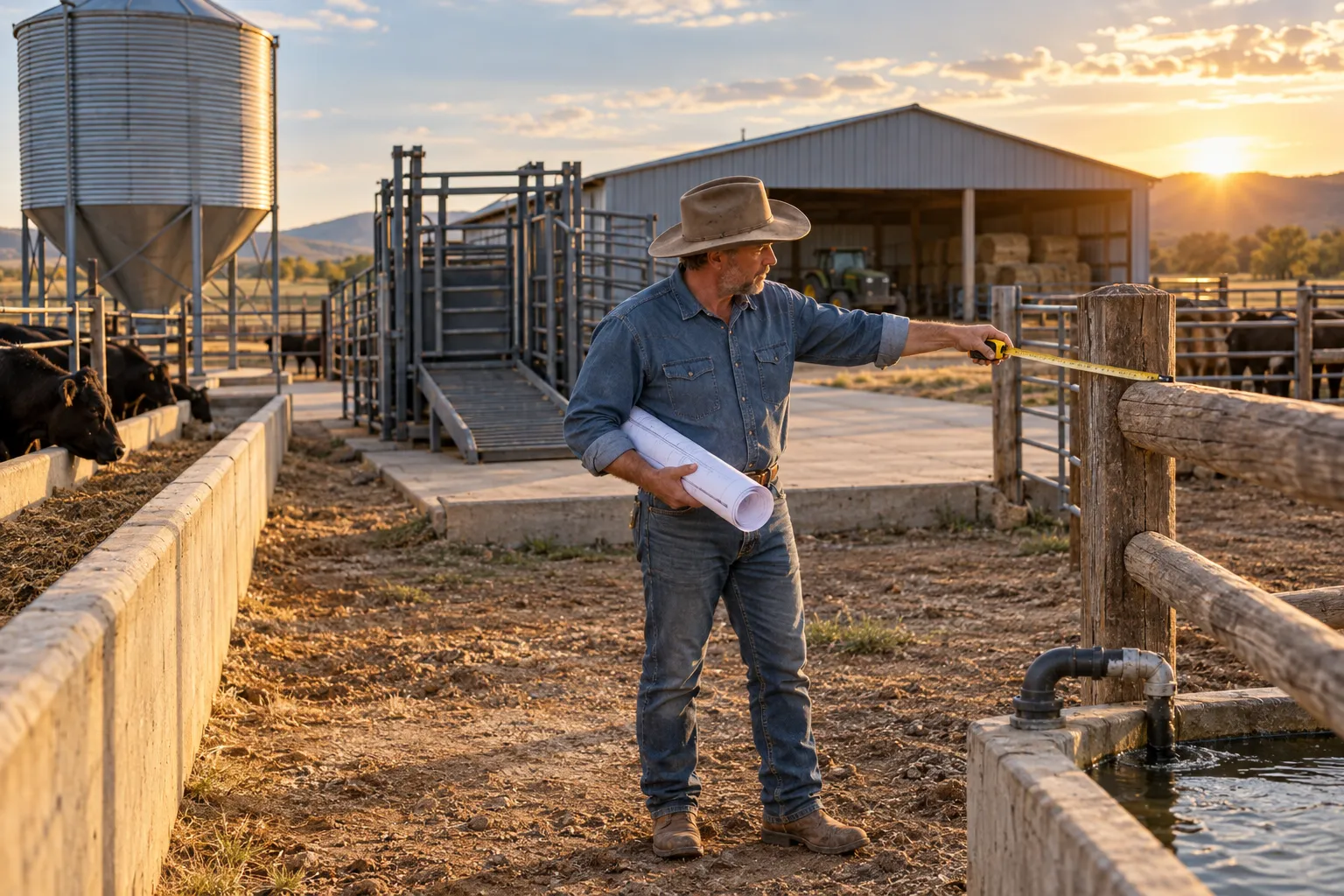
Function, Construction, and Use Drive Ranch Asset Classification
MACRS classification depends on what an asset does, how it was built, and how it is used, not on its ranch-related label. A component serving livestock production may be treated differently from a similar item serving general access, storage, or multiple business functions. IRS Publication 946 provides recovery-period frameworks, and the Internal Revenue Code supplies the statutory rules.
Fencing, Corrals, Pens, Chutes, Cattle Guards, and Working Facilities
IRS Publication 225 lists agricultural fences as 7-year property under the General Depreciation System (GDS), 10-year under ADS, rather than as 15-year land improvements. Agricultural fences are generally Section 1245 property and may be eligible for a Section 179 election. Corrals, pens, sorting alleys, chutes, gates, and cattle guards require individual review. A cattle guard may be a distinct working-facility component or part of a roadway. Keep project invoices, site maps, and descriptions of each component’s function to support its classification.
Livestock Water Wells, Stock Tanks, Drainage, and Ranch Roads
Depreciable water wells that provide water for raising cattle or other livestock are generally 15-year GDS property (20-year ADS). Wells serving other activities require their own review. Drainage facilities are generally 15-year GDS property. Pumps, piping, storage tanks, and electrical components may require separate classification from the well itself.
Ranch roads are often treated as 15-year land improvements, but classification is fact-specific. A paved or surfaced road with a determinable useful life differs from a graded dirt track, which may be treated as nondepreciable land preparation. Records of location, specifications, installation cost, and operational use support the treatment adopted.
Earthen Stock Tanks, Ponds, Terraces, and Land Shaping
Earthen stock tanks, ponds, terraces, excavation, grading, and similar land-shaping costs may be nondepreciable when they lack a determinable useful life. Some qualifying soil and water conservation expenditures may instead be deductible under Section 175. Section 175 is not a general deduction for ranch earthwork:
- The land must be used in farming, and the work must be consistent with a conservation plan approved by the USDA Natural Resources Conservation Service or a comparable state agency.
- The annual deduction is generally limited to 25% of gross income from farming, with any excess carried forward.
- Depreciable property, such as wells, pumps, and pipelines, is not a Section 175 expense.
Barns, Shops, and Single-Purpose Agricultural Structures Under Section 168(i)(13)
Section 168(i)(13) provides a specialized rule for qualifying single-purpose agricultural or horticultural structures, which are 10-year property. For a livestock structure, the statute requires an enclosure or structure specifically designed, constructed, and used exclusively for housing, raising, and feeding a particular type of livestock and its produce, and for housing the equipment necessary for those functions. A general-purpose farm building is generally 20-year property (25-year ADS). A utility barn or shop used for mixed storage, repairs, and other activities does not qualify as single-purpose just because it is on a cattle ranch.
MACRS Recovery Period Reference Table for Common Cattle Ranch Improvements
These periods are reference points, not blanket classifications. A study should explain why each component belongs in its proposed category rather than rely on a ranch-wide label.
| Asset or category | GDS period | ADS period | Key factual question |
|---|---|---|---|
| Agricultural fences | 7-year | 10-year | Is the fence used in the farming business, and are gates or other components separately identifiable? |
| Qualifying single-purpose livestock structure | 10-year | 15-year | Is it specifically designed, constructed, and used exclusively for housing, raising, and feeding a particular type of livestock? |
| Depreciable water wells serving livestock | 15-year | 20-year | Does the well provide water for raising livestock, and are pumps, piping, tanks, or electrical components separately identifiable? |
| Drainage facilities | 15-year | 20-year | Does the component function as a distinct site improvement or as part of another asset? |
| Roads, paved lots, and similar site improvements | Often 15-year | Often 20-year | Does it have a determinable useful life, or is it nondepreciable land preparation? |
| General-purpose farm building (barn, shop, machine shed) | 20-year | 25-year | Is any portion residential, rental, personal, or nonfarm use? |
| Corrals, pens, chutes, cattle guards, pipelines, manufactured tanks | Varies | Varies | What are the component’s function, construction, basis, and relationship to the overall system? |
| Earthen tanks, ponds, terraces, land shaping | Often nondepreciable | Often nondepreciable | Does it have a determinable useful life, or does Section 175 apply? |
Reference periods reflect the farm property tables in IRS Publication 225. Confirm the applicable ADS period for each asset; actual treatment depends on the asset’s facts.
Bonus Depreciation, Section 179, and Section 168(n) Qualified Production Property
How Bonus Depreciation May Apply to Qualifying Ranch Improvements
Qualified property acquired after January 19, 2025, generally qualifies for a permanent 100% additional first-year depreciation deduction under Section 168(k), unless the taxpayer elects out for a class of property. IRS Notice 2026-11 provides interim guidance. Cost segregation does not create bonus eligibility: each asset must independently meet the acquisition, placed-in-service, business-use, and property-type requirements. A general-purpose farm building, as 20-year property, may be eligible.
Three timing points matter:
- Acquisition date is a defined term. It is set by special rules for written binding contracts and self-constructed property, not necessarily by the closing, invoice, or payment date.
- Older acquisitions keep the old schedule. Property acquired before January 20, 2025, uses the prior phase-down rate for the year it is placed in service. For example, such property placed in service in 2026 generally qualifies for 20%, not 100%.
- A transition election exists. For the first tax year ending after January 19, 2025, a taxpayer may elect a reduced rate (generally 40%) instead of 100% for eligible property.
Farm Elections That Turn Off Bonus Depreciation
Property required to be depreciated under ADS generally is not eligible for Section 168(k) bonus depreciation, and certain farm elections impose that requirement. A voluntary ADS election under Section 168(g)(7) does not, by itself, eliminate bonus eligibility. Confirm existing elections before modeling any first-year deduction.
Section 163(j) election out. A farming business that elects out of the business interest limitation must use ADS for property with a recovery period of 10 years or more. That includes single-purpose livestock structures, livestock wells, drainage facilities, and general-purpose farm buildings. Many smaller ranches are already exempt from Section 163(j) under the small-business gross-receipts test and never need this election.
Section 263A(d)(3) election out. An election out of the uniform capitalization rules by the taxpayer or a related person requires ADS for property used predominantly in the farming business and placed in service in any year the election is in effect. This election is more common in orchards and vineyards, but its ADS requirement is not limited to those operations.
Inherited Ranches: Basis Without Bonus or Section 179
An inherited ranch generally receives a basis under Section 1014 equal to fair market value at the date of death, subject to exceptions such as alternate valuation or an elected Section 2032A special-use valuation. That basis is allocated between land and improvements. The portion allocable to qualifying business improvements is depreciable; the portion allocable to land is not.
Property acquired from a decedent, however, is not “purchased” property. As a result, inherited improvements generally do not qualify for bonus depreciation or Section 179 expensing and are recovered over their regular MACRS periods. Here, accurate classification into shorter recovery periods can matter more than it does for a purchased ranch. These restrictions apply to the inherited assets themselves; equipment purchased and improvements constructed after the inheritance are tested independently and may qualify.
Section 179 Expensing: Current Limits, Taxable Income Tests, and Ranch Asset Eligibility
Section 179 may allow immediate expensing of eligible property, subject to annual limits, a dollar-for-dollar phaseout, and a taxable business income limitation. For tax years beginning in 2026, Revenue Procedure 2025-32 sets the maximum at $2,560,000, with the phaseout beginning when qualifying property placed in service exceeds $4,090,000. The deduction is fully phased out at $6,650,000. Amounts limited by taxable income may carry forward. Trusts and estates cannot claim Section 179.
Not every ranch improvement qualifies. Agricultural fences and qualifying single-purpose livestock structures are generally Section 1245 property and may be eligible. A general-purpose farm building generally is not eligible for Section 179 as a building, even though it may be eligible for bonus depreciation. Confirm the current-year limit and eligibility before electing.
Section 168(n) Qualified Production Property: Rarely a Fit for Ranch Buildings
Section 168(n) is an elective 100% special depreciation allowance for qualified production property (QPP). IRS Notice 2026-16 provides interim guidance. The notice treats breeding, rearing, feeding, and managing livestock, including cattle, as agricultural production. A qualifying activity, however, does not make a building QPP.
The main barrier is property type. QPP must be nonresidential real property, and nonresidential real property excludes property with a class life under 27.5 years. Farm buildings and single-purpose agricultural structures fall below that threshold, so they generally cannot be QPP; they are instead 10-year or 20-year property that may qualify for Section 168(k) bonus depreciation. Other requirements include:
- The property must be used as an integral part of a qualified production activity involving substantial transformation of a qualified product.
- Construction generally must begin after January 19, 2025, and before January 1, 2029, and the property generally must be placed in service after July 4, 2025, and before January 1, 2031. The notice includes a limited exception for certain used property.
- The taxpayer must make an election on a timely filed return identifying each property.
Property leased to a third party generally does not qualify, which matters when ranch real estate is held in an entity separate from the operating business. Lodging and office space are excluded, and property required to use ADS is ineligible.
If, within 10 years after QPP is placed in service, it stops being used as an integral part of a qualified production activity and is put to another productive use, special ordinary-income recapture rules generally apply. Sales and other dispositions require separate recapture analysis. For most cattle operations, Section 168(n) is relevant only to unusual facilities, such as on-ranch processing buildings. Obtain property-specific tax advice before relying on it.
Why a Shorter Recovery Period Does Not Automatically Mean Bonus Depreciation
Cost segregation classifies depreciable components and their recovery periods; bonus depreciation and Section 179 have their own eligibility rules. An asset may have a shorter recovery period yet fail a special allowance’s requirements, or qualify under one provision but not another. Review classification, acquisition method, ownership, business use, placed-in-service timing, and elections together.
Election, Timing, and Recapture Questions to Resolve Before Implementation
Before filing, establish when each asset was placed in service, which recovery method and convention apply, and which elections are already in effect. Then decide whether electing out of bonus depreciation, electing the transition rate, or making a Section 179 election fits the taxpayer’s circumstances. Consider current and projected taxable income, effects on other deductions, and later recapture. Choose based on the full return, not just the largest first-year deduction.
| Provision | What it may do | Key review point |
|---|---|---|
| Section 168(k) | Allow 100% bonus depreciation for qualifying property acquired after January 19, 2025 | Acquisition method and date, placed-in-service date, and any election requiring ADS |
| Section 179 | Allow expensing within annual limits | Section 1245 status, phaseout, taxable income, and taxpayer type |
| Section 168(n) | Allow an elective 100% allowance for qualified production property | Nonresidential real property status, substantial transformation, leasing, and construction and placed-in-service dates |
Can You Actually Use the Deduction? Basis, At-Risk, Passive Loss, and Excess Business Loss Limits
Active Ranch Business vs. Hobby, Recreational, or Investment Property
A larger depreciation deduction does not guarantee a current tax benefit. The ranch’s status depends on facts such as operating intent, records, revenue, expenses, and the owner’s conduct. A commercial cattle operation with business records and regular production differs from personal recreational use or an activity not engaged in for profit. Hobby-loss rules require a separate facts-and-circumstances analysis. The label “ranch” alone does not establish business status.
The Order in Which Loss Limits Apply
A ranch loss from accelerated depreciation passes through several limits, generally in this order:
- Basis. Partnership losses are generally limited by the partner’s adjusted outside basis. S corporation losses are generally limited by the shareholder’s adjusted stock basis plus qualifying debt basis.
- At-risk rules (Section 465). Losses are limited to the amount the owner has at risk, which can be affected by nonrecourse financing.
- Passive activity rules (Section 469). Passive losses generally offset only passive income unless the owner materially participates.
- Excess business loss (Section 461(l)). For noncorporate taxpayers, net business losses above an annual threshold are disallowed for the year and carried forward as a net operating loss.
Any remaining loss may create or add to a net operating loss, subject to its own rules. Material participation alone does not mean a ranch loss can offset wages or other income in the current year.
Material Participation Tests for Working Ranchers and Owner-Operators
For an individual owner, participation can determine whether losses are passive under Section 469. Relevant facts include time spent managing cattle, supervising labor, maintaining records, purchasing feed and supplies, and making operational decisions. Regulations provide multiple material participation tests with specific requirements; general involvement is not enough.
Keep records sufficient to substantiate participation, such as calendars, time records, work orders, and narrative summaries of services performed and approximate hours. Distinguish ranch work from investor oversight. Contemporaneous daily logs are helpful but not required if participation can be established by other reasonable means. Owners sharing management with family, employees, or contractors should document who performed each activity.
Grouping and Self-Rental Considerations
Grouping activities may be possible when they form an appropriate economic unit, but it can affect later tax treatment and should not be adopted casually. Self-rental rules may change how income from property rented to an operating business is characterized. Review ownership, participation, rental arrangements, and existing elections together.
Short-Term Stay Rules Are Not a Complete Ranch Eligibility Test
A ranch with lodging, hunting access, or guest accommodations may involve separate activities, services, and mixed personal and business use. The rental-activity exceptions use average customer-use tests, including an average stay of 7 days or less, or 30 days or less when significant personal services are provided. Even when an arrangement falls outside the rental-activity definition, the owner must still evaluate material participation and the full Section 469 framework before treating losses as nonpassive.
Usability Checklist Before Commissioning a Ranch Cost Segregation Study
- Is the ranch operated with a documented profit motive and consistent business records?
- How is the ranch owned, and does each owner have enough basis and amount at risk to absorb a loss?
- Who performs management and production work, and how is participation recorded?
- Are there passive income sources, suspended losses, carryforwards, or rental arrangements to review?
- Could the excess business loss limit apply to this owner this year?
- Does personal or recreational use affect the property or its expenses?
- Have the owner’s tax advisor and preparer reviewed how projected deductions fit the return?
Basis Allocation, Look-Back Studies, Recapture, and a Realistic Implementation Workflow
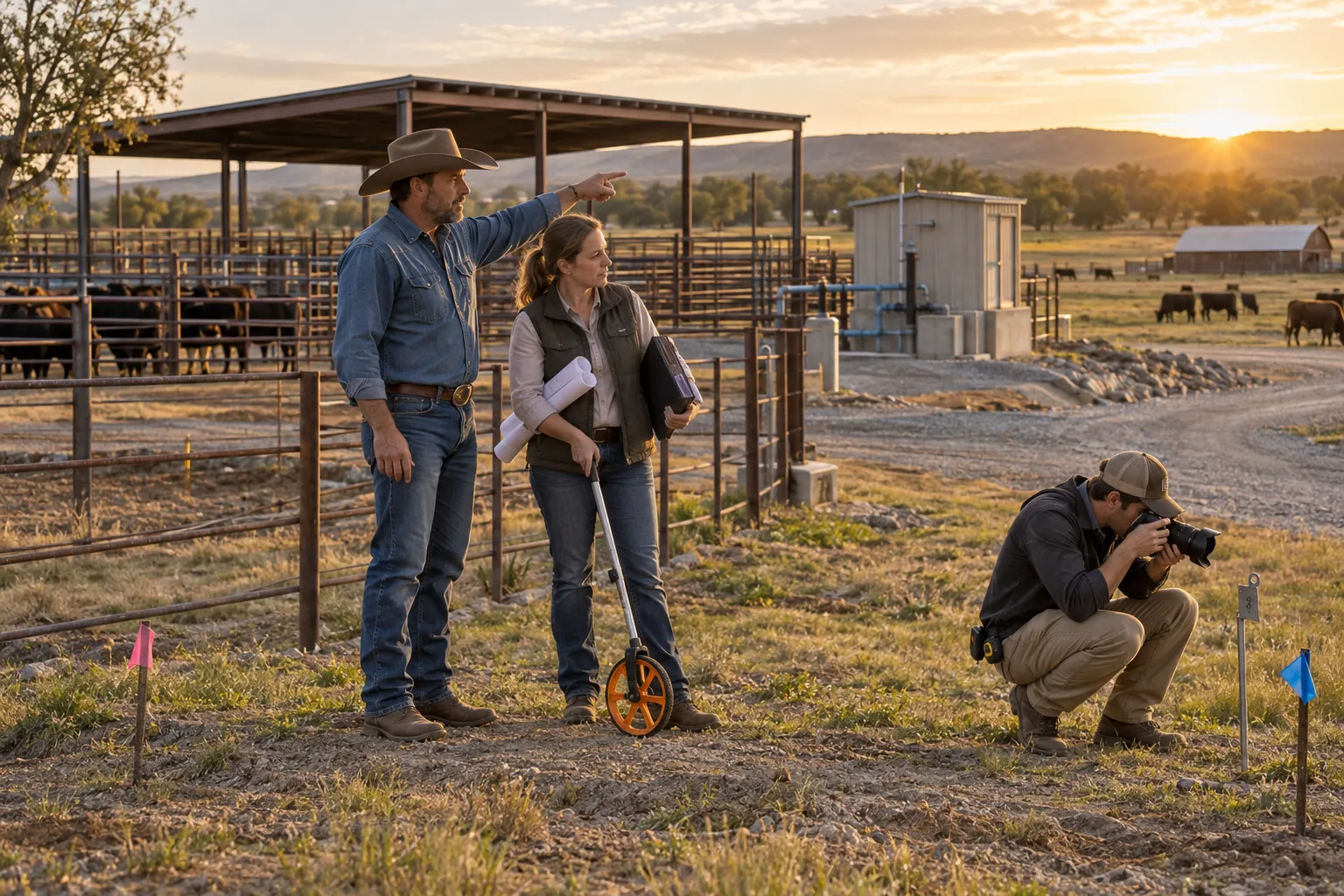
Allocating Purchase Price Between Land and Ranch Improvements: Hypothetical Model With Assumptions
The starting point is supportable tax basis in depreciable property, not acreage or purchase price alone. The actual allocation must reflect transaction and property evidence.
Illustrative example only: A buyer purchases a working cattle ranch for $2,500,000. Assume a supportable allocation assigns $1,700,000 to land, $250,000 to the owner’s residence, $150,000 to a general-purpose barn, and $400,000 to fences, a livestock water well, handling facilities, and a single-purpose livestock structure. The land is not depreciable, and the residence generally is not depreciable unless it is used in the business or rented. The analysis would focus on the $550,000 of business improvement basis.
If the purchase occurred after January 19, 2025, and no ADS election applies, much of that $550,000 may already qualify for 100% bonus depreciation. The study’s role would then center on supporting the land allocation, documenting each asset, and evaluating Section 179 and recapture. If the same ranch were inherited, bonus depreciation and Section 179 generally would not be available, and classification into shorter recovery periods would drive the timing of deductions.
These figures are hypothetical and do not represent typical allocation percentages.
Step-by-Step Cost Segregation Evaluation Workflow for Cattle Ranches
- Gather the records. Collect closing statements, appraisals, estate or inheritance documents, construction invoices, plans, prior depreciation schedules, and placed-in-service dates.
- Confirm elections and acquisition method. Identify any Section 163(j) or Section 263A(d)(3) elections, and whether each asset was purchased, built, or inherited.
- Test the basis. Reconcile proposed land and improvement allocations to acquisition, inherited, or construction basis, checking for unsupported amounts or duplicated costs.
- Document the assets. Identify improvements, condition, and function in ranch operations. Engineering work should tie findings to available cost evidence.
- Coordinate tax treatment. Review proposed classifications, elections, deduction timing, loss limits, and reporting with the tax return preparer before implementation.
Look-Back Cost Segregation and Form 3115: When Prior Tax Years Enter the Analysis
A look-back study may identify depreciable components not separately classified when property entered service in an earlier year. If the taxpayer has adopted an impermissible depreciation method, a change in accounting method may be available through Form 3115. A Section 481(a) adjustment accounts for the cumulative difference between depreciation claimed and allowable. If the taxpayer qualifies for an applicable automatic change, a favorable adjustment is generally taken in full in the year of change. That catch-up is often the principal benefit of a look-back study.
An impermissible depreciation method is generally adopted only after it is used on two consecutive filed returns. If it was used on only one, an amended return may be appropriate. The automatic-change procedures also permit Form 3115 for certain one-year depreciable property. The proper correction depends on the method used, filing history, amendment timing, and applicable procedures.
A look-back applies the depreciation and bonus rules in effect for each asset’s original acquisition and placed-in-service dates, including any elections made then. It does not apply the newly restored 100% rate to all older assets. However, qualifying property acquired after September 27, 2017, and placed in service before 2023 was generally eligible for 100% bonus depreciation under prior law, so a look-back can recover missed deductions at that rate. For qualifying property acquired before January 20, 2025, the generally applicable rates were 80%, 60%, and 40% when placed in service in 2023, 2024, and 2025, respectively, subject to special rules for certain long-production-period property and aircraft.
Depreciation Recapture on Disposition: Section 1245 vs. Section 1250 Considerations
Accelerated deductions can affect the tax character of gain when ranch property is sold. The sale also requires allocating proceeds among land, buildings, equipment, and separately classified improvements rather than treating the ranch as a single asset.
- Section 1245 property. Agricultural fences and qualifying single-purpose livestock structures are generally Section 1245 property. Recognized gain is generally ordinary income up to the depreciation and expensing deductions allowed or allowable, subject to applicable exceptions.
- Section 1250 property. General-purpose farm buildings are generally Section 1250 property. Under GDS they generally use the 150% declining balance method, switching to straight-line when applicable, unless a different permissible method or ADS applies. Depreciation exceeding straight-line, including bonus depreciation, can produce ordinary-income recapture. For individuals, qualifying remaining gain attributable to depreciation may be unrecaptured Section 1250 gain, taxed at a maximum 25% federal rate.
- Section 168(n) property. QPP has separate recapture rules if it stops being used in a qualified production activity.
Model disposition consequences alongside current-year deductions, especially if a sale, transfer, or change in business use is foreseeable.
Frequently Asked Questions
What ranch assets may qualify for accelerated depreciation through cost segregation?
Cattle ranch cost segregation may identify depreciable assets such as agricultural fences, corrals, livestock water systems, roads, and agricultural structures, each with its own recovery period. Eligibility depends on each asset’s basis, construction, function, business use, and applicable tax rules. A shorter recovery period alone does not establish eligibility for a particular deduction.
If my barn already qualifies for 100% bonus depreciation, do I need a study?
Possibly not for the first-year deduction. A general-purpose farm building is generally 20-year property, so a qualifying building acquired after January 19, 2025, may already be fully deductible in its first year. A study may still help with the land allocation, look-back corrections on older property, Section 179 eligibility, an inherited or ADS-bound ranch, and recapture planning.
How do you separate non-depreciable grazing land from depreciable ranch improvements?
By supporting a reasonable allocation of tax basis between the two. Purchase documents, appraisals, estate valuations, construction invoices, and asset condition help establish that allocation; assessor records can contribute but are not a substitute for valuation support. Grazing land is not depreciable, while qualifying improvements may be depreciated if they have a determinable basis and useful life and are placed in service.
What is the difference between a single-purpose livestock structure and a general utility barn?
A single-purpose livestock structure is specifically designed, constructed, and used exclusively for housing, raising, and feeding a particular type of livestock, and may qualify as 10-year property under Section 168(i)(13). A general utility barn used for mixed storage, repairs, or other activities is generally 20-year property. Design, actual use, and statutory requirements all matter.
Can a cattle ranch qualify for bonus depreciation or Section 179 deductions?
Certain ranch property may qualify if the assets and owner meet the requirements. Bonus depreciation is generally 100% for qualified property acquired after January 19, 2025. It is generally not available for property required to use ADS, as some farm elections require, and neither bonus nor Section 179 is generally available for inherited assets. Assets purchased or built after an inheritance are tested separately. Accelerated deductions generally change timing rather than guarantee permanent tax savings.
How does the IRS treat ranch fences, water wells, cattle guards, and stock tanks?
IRS Publication 225 lists agricultural fences as 7-year property and depreciable water wells providing water for livestock as 15-year property. Cattle guards, pipelines, and manufactured tanks depend on each item’s function, construction, cost, and use. Earthen stock tanks and ponds may be nondepreciable or may qualify under Section 175, subject to its conservation-plan requirement and income limit.
Sources
- IRS Publication 225, Farmer’s Tax Guide
- IRS Publication 946, How To Depreciate Property
- IRS Publication 925, Passive Activity and At-Risk Rules
- IRS Publication 5653, Cost Segregation Audit Techniques Guide
- IRS Notice 2026-11, Additional First-Year Depreciation (Section 168(k))
- IRS Notice 2026-16, Qualified Production Property (Section 168(n))
- Revenue Procedure 2025-32, 2026 Inflation Adjustments
- Revenue Procedure 2026-17, Withdrawal of Section 163(j)(7) Elections