
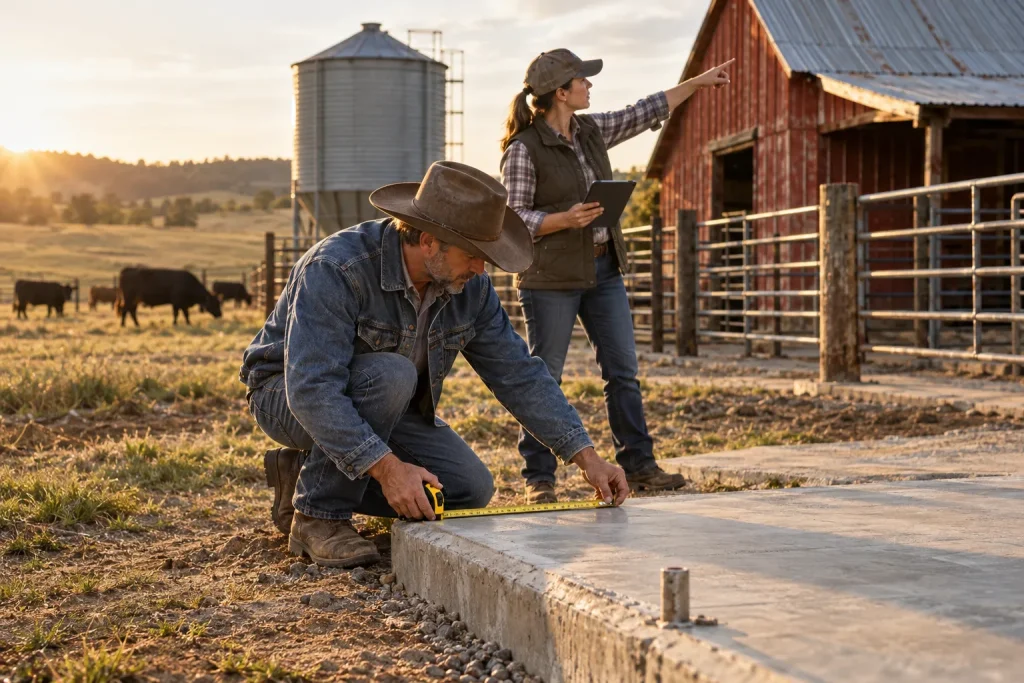
ranch depreciation
Ranch depreciation depends on each asset’s function, construction, and use in the farming business. IRS Publication 225, Publication 946, and the Internal Revenue Code address different parts of the analysis, so fences, wells, drainage systems, livestock structures, and general-purpose buildings should be reviewed separately.
Key Takeaways
- Recovery periods vary by what each ranch asset actually does, with agricultural fences generally classified as 7-year property and qualifying single-purpose livestock structures as 10-year property under current IRS references.
- Earthen stock tanks, ponds, terraces, and similar land-shaping costs may be nondepreciable when they lack a determinable useful life, and qualifying conservation expenditures may warrant evaluation under Section 175.
- Asset classification answers only part of the question, because whether and when an owner can actually use the resulting deductions depends on taxable income, passive activity, and material participation facts.
- Review depreciation schedules annually and whenever significant assets are acquired, built, sold, converted, leased, or changed in use to keep classifications aligned with the operation.
Start with an asset inventory. Classify each item by function, construction, business use, and supporting records, then evaluate the applicable depreciation rules and whether the resulting deductions can be used.
Ranch Depreciation: The Direct Answer and Why Cattle Ranches Are Different
Ranch depreciation is the recovery of the tax basis of eligible property used in a cattle operation over the period prescribed for that property. Some ranch assets have specific agricultural recovery periods; buildings and other improvements may follow different rules. Land itself is not depreciable. Treatment depends on an asset’s actual function, construction, business use, and applicable tax law. Not simply its location on a ranch.
What Ranch Depreciation Covers on a Working Cattle Operation
A working operation may include agricultural fences, livestock-handling facilities, wells, pumps, pipelines, drainage, roads, barns, shops, and specialized livestock structures. Each needs its own classification. IRS Publication 225 lists agricultural fences as 7-year property under the General Depreciation System (GDS); depreciable water wells used in farming or livestock operations are generally 15-year GDS property. These references do not establish the treatment of every related component.
Key Takeaways at a Glance
- Ranch improvements carry different recovery periods based on function and use. Agricultural fences, qualifying single-purpose livestock structures, water wells, drainage facilities, and general-purpose farm buildings are classified under the rules that apply to what they actually do.
- Land-shaping costs may be nondepreciable when they have no determinable useful life; qualifying soil and water conservation expenditures may warrant evaluation under Section 175.
- Review depreciation schedules annually, and whenever significant assets are acquired, built, sold, converted to personal use, leased, or changed in use.
Why Asset Function, Not Asset Name, Drives Recovery Periods
Labels such as “barn,” “tank,” or “cattle guard” do not settle tax classification. Design and exclusive use may matter, as may whether a component is a distinct improvement or part of a larger system. An agricultural fence and a paved access area should not receive the same recovery period just because both are outside. Invoices, plans, maps, specifications, and use descriptions can support classification. Publication 5653 is IRS examiner guidance, not law, IRS approval, or a safe harbor.
Recovery Periods for Common Cattle Ranch Improvements: An Asset-by-Asset Framework
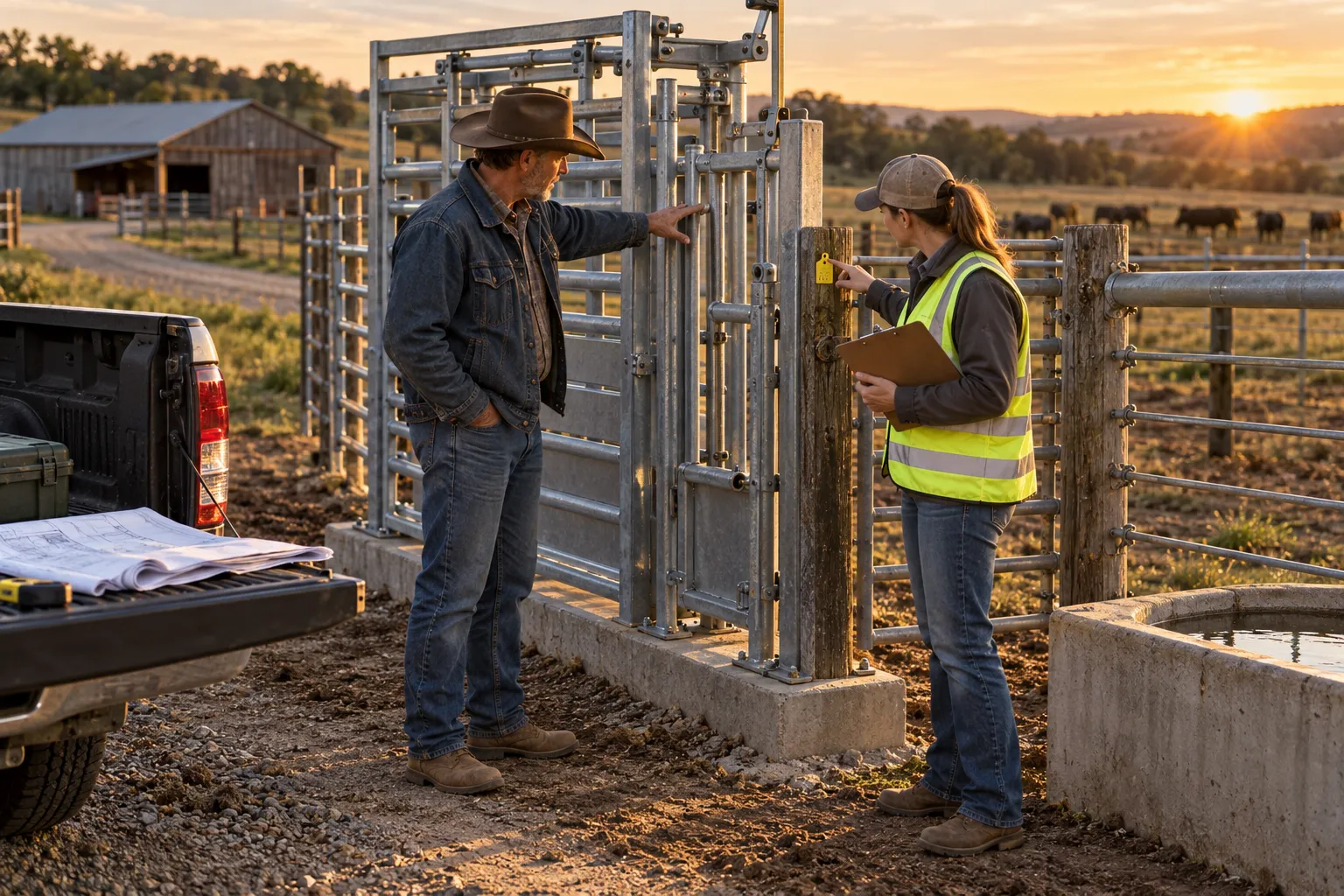
Use recovery periods as a starting point, not an automatic answer for every ranch project. IRS Publication 225 provides references for certain farm property, but construction, use, and component-level facts can affect the analysis. The table summarizes general GDS references; ADS periods are longer. Confirm current authority and the taxpayer’s facts before applying a period.
Fences, Corrals, Pens, Chutes, and Working Facilities
IRS Publication 225 lists agricultural fences as 7-year property under the General Depreciation System (10-year under the Alternative Depreciation System), rather than as 15-year land improvements. Gates and separately identifiable components may still require separate review. Corrals, pens, chutes, and cattle guards do not all share one classification. Function, construction, cost, and relationship to other facilities matter; a cattle guard may be part of a working facility or a roadway.
Water Wells, Drainage, Pumps, and Ranch Roads
Depreciable water wells used in farming or livestock operations are generally 15-year GDS property (20-year ADS), and drainage facilities are generally 15-year GDS property. Pumps, piping, storage tanks, and electrical components may require separate classification. Roads, paved lots, and similar site improvements also need review by function and relationship to other property. Record which components provide water extraction, conveyance, storage, drainage, or access.
Earthen Stock Tanks, Ponds, Terraces, and Land Shaping: Possibly Not Depreciable at All
Not every water-related ranch expenditure is depreciable. Earthen stock tanks, ponds, terraces, excavation, grading, and similar land-shaping costs may be nondepreciable when they do not have a determinable useful life. In some circumstances, qualifying soil and water conservation expenditures may instead be evaluated under Section 175. Earthwork does not necessarily receive the same treatment as a well, pump, pipeline, or manufactured water-storage system.
Barns, Shops, and Single-Purpose Livestock Structures Under Section 168(i)(13)
Section 168(i)(13) provides a specialized rule for qualifying single-purpose agricultural or horticultural structures, which are 10-year property. For a livestock structure, the statute requires an enclosure or structure specifically designed, constructed, and used exclusively for housing, raising, and feeding a particular type of livestock and its produce, and for housing the equipment necessary for those functions. A general-purpose farm building, by contrast, is generally 20-year property.
A barn’s name or livestock-related use alone does not establish eligibility. Mixed storage, repairs, or other uses may affect the exclusive-use test. A tax preparer should confirm the statutory wording and its application to the structure before publication or reliance.
MACRS Recovery Period Reference Table for Common Ranch Improvements
| Asset or category | General reference (GDS recovery period) | Key factual question |
|---|---|---|
| Qualifying single-purpose livestock structure | 10-year | Is the structure specifically designed, constructed, and used exclusively for housing, raising, and feeding a particular type of livestock? |
| General-purpose farm building (barn, shop, machine shed) | 20-year | Is it used in the farming business, and is any portion residential, rental, personal, or nonfarm use? |
| Agricultural fences | 7-year | Is the fence used in the farming business, and are gates or other components separately identifiable? |
| Water wells used in farming or livestock operations | 15-year | Is the well depreciable, and are pumps, piping, tanks, or electrical components separately identifiable? |
| Drainage facilities, roads, paved lots, and similar site improvements | 15-year | Does the component function as a distinct site improvement or as part of another asset? |
| Corrals, pens, chutes, cattle guards, pipelines, and manufactured tanks | Classification varies by asset and facts | What is the component’s function, construction, basis, and relationship to the overall system? |
| Earthen tanks, ponds, terraces, and land shaping | May be nondepreciable, or evaluated under Section 175 | Does the improvement have a determinable useful life? |
Reference periods reflect the farm property recovery periods in IRS Publication 225. Alternative Depreciation System (ADS) periods are longer. Actual treatment depends on the asset’s facts.
Bonus Depreciation, Section 179, and Section 168(n): How the Three First-Year Rules Differ
Section 168(k), Section 179, and Section 168(n) have different eligibility tests. A ranch asset does not qualify just because it is used in a business or has a shorter MACRS recovery period. Identify the property, acquisition or construction and placed-in-service dates, and the specific requirements of the rule. Check IRS Publication 946 and current notices against the taxpayer’s facts before taking a return position.
Section 168(k) Bonus Depreciation After January 19, 2025
IRS Notice 2026-11 provides interim guidance. Each asset must meet applicable acquisition, placed-in-service, business-use, and property-type rules. A shorter recovery period, cost-segregation analysis, or ranch location does not establish eligibility by itself.
Property acquired before January 20, 2025, remains subject to the rules and phase-down percentage applicable to its acquisition and placed-in-service year. A general-purpose farm building may qualify if it meets the requirements, even though its regular MACRS recovery period is generally 20 years.
Section 179 Expensing: 2026 Limits, Taxable Income Tests, and Which Ranch Assets Qualify
For tax years beginning in 2026, the supplied IRS Publication 946 baseline lists a maximum Section 179 deduction of $2,560,000, reduced when qualifying property placed in service exceeds $4,090,000. The deduction is fully phased out once qualifying property placed in service reaches $6,650,000. Verify these annual limits against current authority. Section 179 also has qualifying-property requirements and a taxable-income limitation, so a taxpayer may not be able to claim or use the maximum.
A qualifying single-purpose livestock structure may be Section 1245 property and may be eligible for a Section 179 election. A general-purpose farm building generally is not eligible for Section 179 expensing as a building, though it may qualify for bonus depreciation if all requirements are met. Evaluate each asset separately rather than treating an entire ranch purchase as eligible property.
Section 168(n) Qualified Production Property: A Narrow Rule for Ranch Operations
QPP generally must be nonresidential real property used as an integral part of a qualified production activity involving manufacturing, production, or refining that substantially transforms property into a qualified product. IRS Notice 2026-16 provides interim guidance.
For ordinary cattle operations, this rule may be inapplicable or offer limited incremental value. Many farm structures are 10-year or 20-year MACRS property rather than nonresidential real property. Grazing, livestock husbandry, mixed-use barns, residences, and routine working facilities should not be presumed to qualify. If QPP ceases to be used in a qualified production activity within 10 years, the deduction is generally subject to ordinary-income recapture. The nonresidential-real-property distinction and other statutory conditions require preparer confirmation and property-specific review.
Side-by-Side Comparison of the Three Provisions
| Provision | What it may do | Key review point |
|---|---|---|
| Section 179 | Allow an election to expense qualifying property, subject to annual limits and taxable-income rules | Property eligibility, 2026 limits, phaseout, and taxable-income limitation |
| Section 168(n) | Allow an elective 100% special depreciation deduction for qualifying QPP | Substantial transformation, real property status, and construction and placed-in-service dates |
Basis, Allocation, and Look-Back Studies: What You Buy, What You Depreciate, and What You Catch Up
Depreciation begins with supported tax basis, not the ranch’s total purchase price treated as one depreciable amount. Separate land, any residence, buildings, equipment, and identifiable business improvements. An allocation for acquired property should be supportable and consistent with transaction records and asset facts. A cost-segregation analysis may identify components for review, but does not establish basis, eligibility, or the amount of a deduction the owner can use.
Allocating Purchase Price Between Land, Residence, and Depreciable Improvements: Illustrative Example With Assumptions
Illustrative example only: A buyer acquires a working cattle ranch for $2,500,000. The land is not depreciable, and the residence is generally not depreciable unless used in the business or rented. These amounts are hypothetical and do not represent typical allocation percentages or a valuation conclusion.
Look-Back Cost Segregation and Form 3115: Section 481(a) Catch-Up Mechanics
A look-back analysis may identify depreciation allowable but not previously claimed on property placed in service in an earlier year. If the taxpayer qualifies for an applicable automatic accounting-method change and meets filing requirements, a favorable Section 481(a) adjustment is generally included in full in the year of change. Eligibility and procedure depend on filing history, the applicable method-change rules, and supported basis. A study identifying a different classification does not automatically make an adjustment available.
Bonus depreciation in a look-back follows the rules applicable when the property was originally placed in service. Improvements acquired before January 20, 2025, do not receive the current 100% rate solely because a later study identifies them as separate assets. Confirm historical acquisition and placed-in-service dates, prior depreciation claimed, current Form 3115 procedure, and whether the owner can use the deduction.
Documentation to Support Ranch Asset Classifications
Connect each proposed classification to its cost, physical description, function, and business use. Useful records may include:
- Purchase agreements, closing statements, invoices, and construction contracts showing costs and allocation support.
- Maps, plans, specifications, photographs, and engineering or contractor descriptions identifying separate components.
- Use records showing how structures and facilities operate, including personal, residential, rental, or nonfarm use.
- Prior depreciation schedules, filed returns, placed-in-service dates, and records of later improvements or changes in use.
Reconcile records with tax basis and the proposed recovery method before filing. For a look-back, retain support for the original treatment and accounting-method change; verify current procedures and primary authority, including IRS Publication 946 and applicable Form 3115 guidance.
Using the Deductions: Passive-Loss Rules, Disposition, and Recapture on a Cattle Ranch
A depreciation deduction and the ability to use it in the current year are separate questions. Asset classification determines depreciation treatment; the taxpayer’s activity, income, and other circumstances affect when a deduction can reduce taxable income. Consider passive-activity rules, owner participation, and the tax consequences of a later sale or change in use. Accelerated deductions may affect cash flow, but their economics depend on usability and possible recapture.
Material Participation and Whether Ranch Losses Are Usable Now
Section 469 generally limits the use of passive losses against nonpassive income. Whether a cattle operation is passive depends on the taxpayer’s facts, including participation and applicable rules. A large depreciation deduction does not establish material participation or current usability. Review the ranch’s activity, the owner’s work, other income, and suspended losses.
Maintain records sufficient to substantiate participation, such as calendars, time records, appointment books, work orders, and narrative summaries of services and approximate hours. Distinguish ranch operations, such as handling livestock or overseeing repairs, from investor oversight. Contemporaneous daily logs are helpful, but other reasonable records may support participation. IRS Publication 925 and Section 469 provide guidance; the tests and records applicable to an owner require fact-specific review.
Short-Term Stay Rules Are Not a Complete Eligibility Test
A ranch that provides lodging or guest stays may need a separate rental-activity analysis. Under exceptions described in the Section 469 regulations, relevant average customer-use tests include stays of 7 days or less, or 30 days or less when significant personal services are provided. The applicable test depends on the activity and services. Falling outside the rental-activity definition does not automatically make losses nonpassive. The owner must still evaluate material participation and the full Section 469 framework before treating losses as nonpassive.
Depreciation Recapture on Sale: Section 1245 vs. Section 1250 by Asset
A sale can have different tax consequences by asset. Section 1245 may require ordinary-income recapture to the extent of depreciation claimed, while Section 1250 rules may apply to certain depreciable real property. A qualifying single-purpose livestock structure is generally Section 1245 property, so gain on its sale can be treated as ordinary income to the extent of depreciation claimed. Section 168(n) property has separate recapture rules if it stops being used in a qualified production activity. Allocate expected proceeds among land, buildings, equipment, and separately classified improvements rather than treating the ranch as a single asset.
The character and amount of gain depend on the property, adjusted basis, depreciation allowed or allowable, sale price, and applicable law. A planned sale, exchange, or change in use can affect the economics of accelerated deductions. Review disposition assumptions alongside depreciation planning.
Planning Tradeoffs, Limitations, and Next Steps
Identify each asset and its business use; confirm basis and depreciation method; estimate when deductions may be usable; then model possible recapture and disposition outcomes. Revisit the analysis when significant property is acquired, built, sold, leased, converted to personal use, or changed in use. Supporting records and current primary authority matter, and law or circumstances may change.
Next step: Gather depreciation schedules, filed returns, asset invoices, participation records, and planned sale or change-of-use information. A tax advisor can review how the rules apply to the ranch’s facts and coordinate with the owner’s existing tax professionals.
Request a Tax Savings Evaluation
Frequently Asked Questions
How many years can you depreciate a barn on a ranch?
A general-purpose farm building such as a barn or shop is generally 20-year property under MACRS. A qualifying single-purpose livestock structure under Section 168(i)(13) is 10-year property, but it must be specifically designed, constructed, and used exclusively for housing, raising, and feeding a particular type of livestock. The barn’s name alone does not determine its classification.
Can you write off 100% depreciation on ranch improvements?
For qualified property acquired after January 19, 2025, current law generally allows 100% bonus depreciation under Section 168(k), subject to the statute’s requirements. Each asset must independently meet acquisition, placed-in-service, business-use, and property-type tests, and cost segregation does not create bonus eligibility on its own.
Can farm land be depreciated?
Farm land itself cannot be depreciated because land does not have a determinable useful life. Only improvements on the land, such as fences, wells, drainage facilities, and buildings, may qualify for depreciation. Earthen stock tanks, ponds, terraces, and similar land-shaping costs may also be nondepreciable, though qualifying conservation expenditures may warrant evaluation under Section 175.
What ranch property cannot be depreciated?
Land, earthen stock tanks, ponds, terraces, and land-shaping costs such as excavation and grading may not be depreciable when they have no determinable useful life. An owner’s residence is generally not depreciable unless it is used in the business or rented. Some qualifying soil and water conservation expenditures may instead be evaluated under Section 175.
What are the IRS rules for depreciating farm equipment and ranch assets?
IRS Publication 225, Publication 946, and the Internal Revenue Code govern farm asset depreciation, and recovery periods depend on each asset’s function, construction, and use. Agricultural fences are generally 7-year property, depreciable water wells and drainage facilities are generally 15-year property, and corrals, pens, and cattle guards vary by facts. An asset inventory and classification review is a practical starting point.
How are ranch fences, water wells, and cattle guards classified for depreciation?
IRS Publication 225 lists agricultural fences as 7-year property and depreciable water wells used in farming or livestock operations as generally 15-year property. Cattle guards, pipelines, and manufactured tanks depend on each item’s function, construction, cost, and use; a cattle guard may be a working-facility component or part of a roadway. Invoices, maps, specifications, and use records help support the classifications reported.
How often should ranch owners review their depreciation schedules?
Ranch depreciation schedules should be reviewed annually, and also whenever significant assets are acquired, built, sold, converted to personal use, leased, or changed in use. Each change can affect classification, recovery periods, and whether the resulting deductions can actually be used. Fact-specific review helps keep reported treatment aligned with current tax law.