
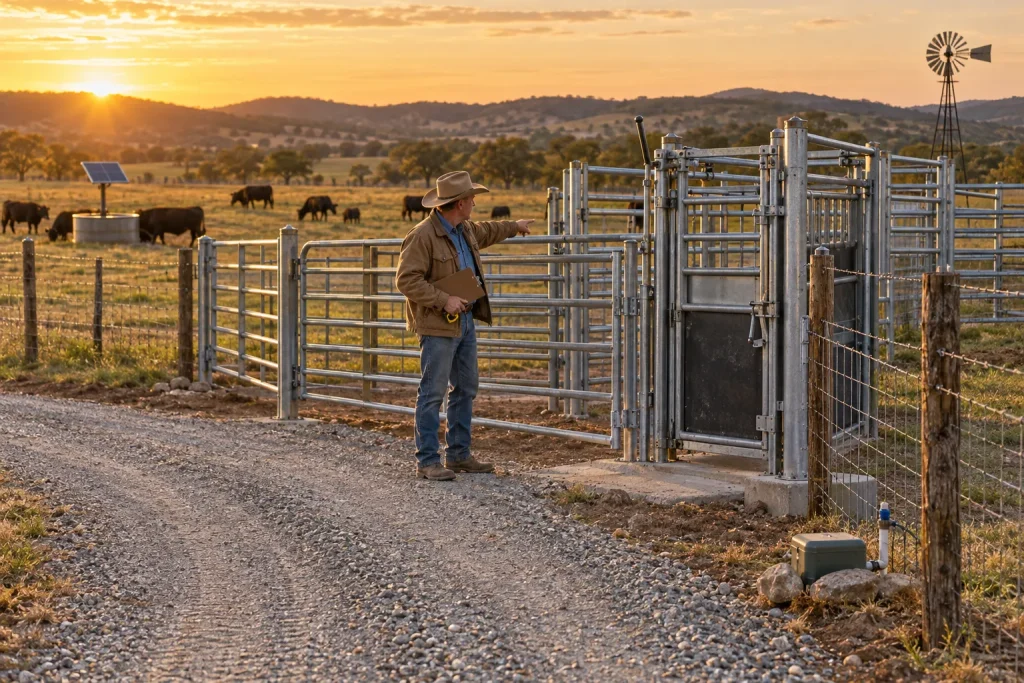
farm land improvements depreciation
Farm land improvements depreciation depends on what an asset does, how it was built, and how it is used in the ranching business. Land itself is not depreciable, while qualifying improvements may have different recovery periods. A fence, water well, drainage system, or earthen pond does not automatically receive the same treatment just because each is on ranch property.
Key Takeaways
- Ranch assets are classified by their actual function and use, so agricultural fences, depreciable water wells, drainage facilities, and farm buildings may follow different recovery periods.
- IRS Publication 225 references agricultural fences as 7-year property under the General Depreciation System, while depreciable farming water wells and drainage facilities generally fall in the 15-year category.
- A qualifying single-purpose livestock structure under Section 168(i)(13) is generally 10-year property, whereas a general-purpose farm building is generally 20-year property.
- Earthen stock tanks, ponds, terraces, and similar land-shaping costs may be nondepreciable when they lack a determinable useful life, though qualifying conservation expenditures may warrant Section 175 evaluation.
Separate land from identifiable assets, then classify each asset by its function, construction, business use, and supporting records. Recovery periods are general references, not a substitute for reviewing the property’s facts and current tax rules.
Farm Land Improvements Depreciation: The Direct Answer for Cattle Ranches
Land Is Not Depreciable; Improvements to Land Usually Are
Land does not wear out through business use in the way a depreciable asset does, so its cost is not depreciated. Improvements require separate analysis. A constructed fence or qualifying well may be depreciable property, while grading, excavation, or other changes to the land may lack a determinable useful life. Some qualifying soil and water conservation costs may warrant evaluation under Section 175 rather than depreciation.
For a ranch purchase, identify and support the basis assigned to land, any residence, buildings, equipment, and distinct improvements. Classification depends on actual function and use, not simply location or the label in a purchase agreement. Keep invoices, maps, construction details, and use records with the tax files.
Some cattle-ranch improvements may be depreciated over recovery periods that differ by asset type. IRS Publication 225 lists agricultural fences as 7-year property under the General Depreciation System (GDS); depreciable farming or livestock water wells are generally 15-year GDS property. Drainage and certain other site improvements are generally 15-year GDS property. Earthen features may instead be nondepreciable or considered under Section 175, depending on their characteristics.
Key Takeaways for Ranch Owners and Operators
How MACRS Recovery Periods Apply to Common Cattle Ranch Improvements
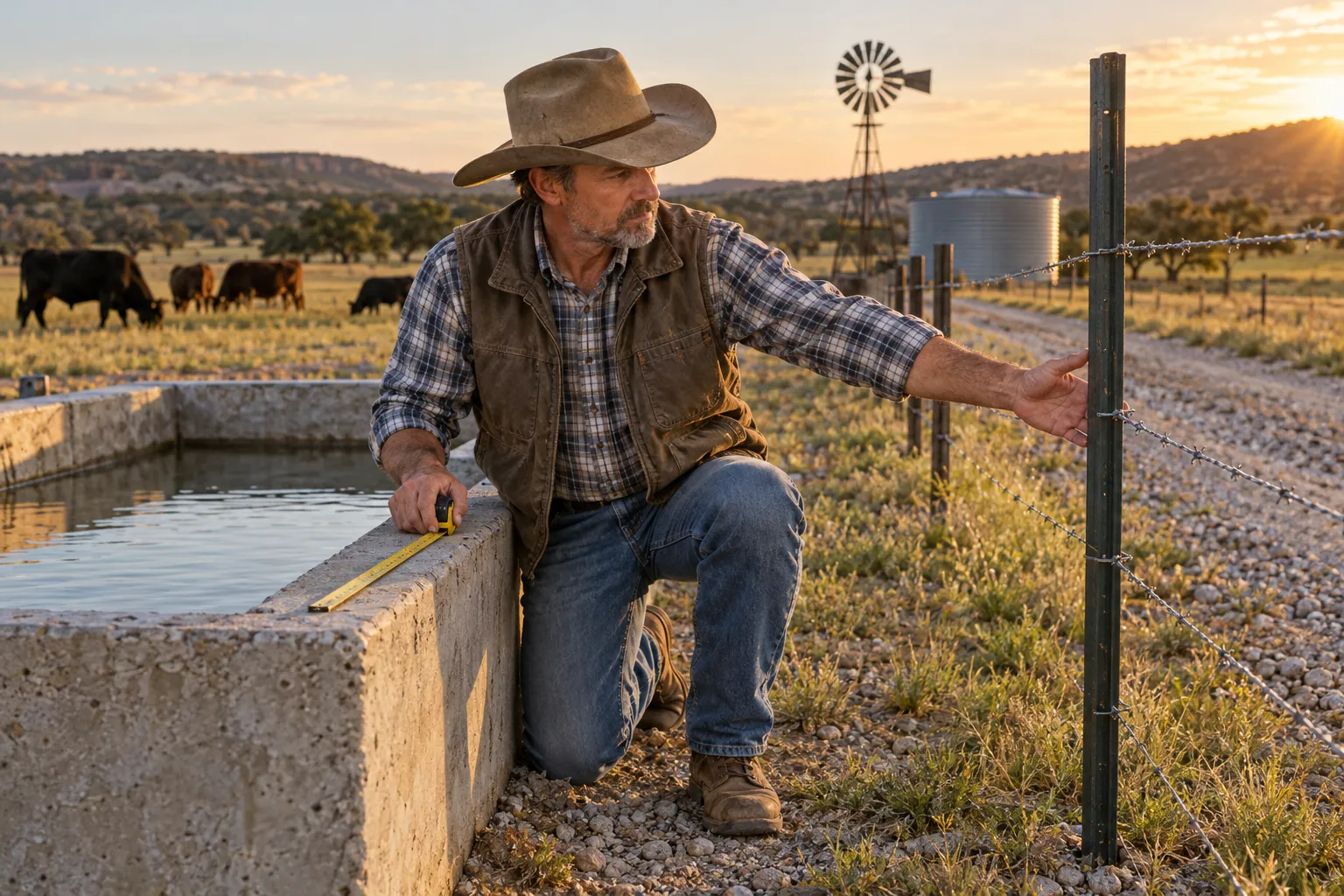
MACRS recovery periods provide a framework for depreciating eligible property, but classification comes first. Separate components may need separate treatment when an improvement combines distinct systems, such as a well, pump, piping, tank, and electrical equipment. Periods below are GDS references; ADS periods are longer where noted, and the asset’s facts control.
Agricultural Fences: 7-Year GDS Property Under Publication 225
IRS Publication 225 lists agricultural fences as 7-year GDS property, rather than 15-year land improvements. The ADS recovery period is 10 years. Gates and separately identifiable components may require their own review. Document agricultural use, construction, cost, and distinct components to support the reported classification.
Water Wells Used in Farming or Livestock Operations: 15-Year GDS Property
Depreciable water wells used in farming or livestock operations are generally 15-year GDS property and 20-year ADS property. A water system may include separately identifiable pumps, piping, storage tanks, or electrical components, each requiring classification based on function and construction. Retain system plans and invoices that distinguish the well from connected equipment.
Drainage Facilities, Ranch Roads, and Paved Lots as Site Improvements
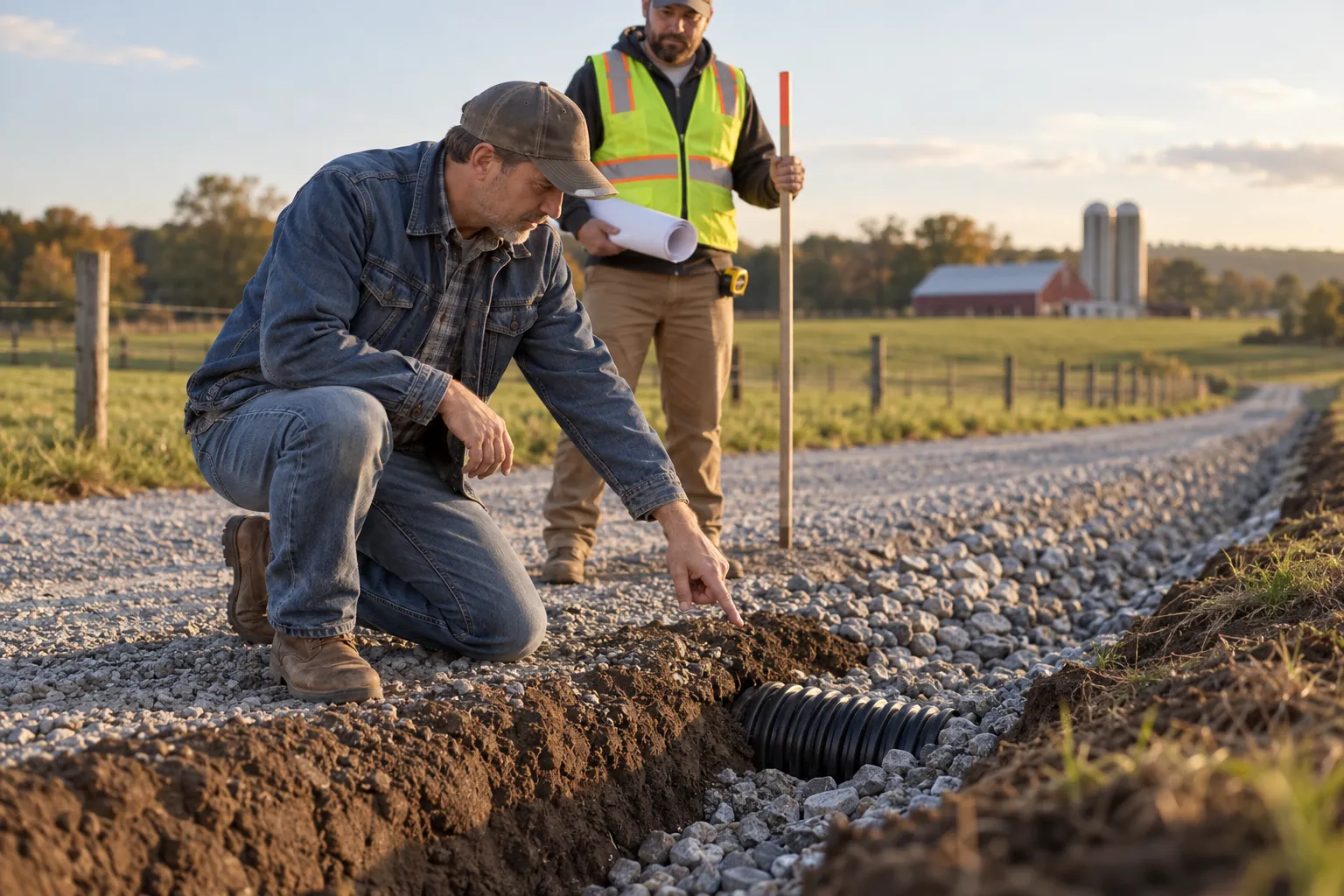
Drainage facilities and certain roads, paved lots, and similar site improvements are generally referenced as 15-year GDS property. Classification depends on whether a component functions as a distinct improvement or as part of another asset. Review construction records, site plans, and use rather than assigning one recovery period to every ranch surface or system.
Earthen Stock Tanks, Ponds, Terraces, and Land Shaping: Nondepreciable or Section 175
Not every water-related ranch expenditure is depreciable. Earthen stock tanks, ponds, terraces, excavation, grading, and similar land-shaping costs may be nondepreciable when they do not have a determinable useful life. In some circumstances, qualifying soil and water conservation expenditures may instead be evaluated under Section 175. Do not assume a pond, earthen tank, or earthwork project receives the same treatment as a well, pump, pipeline, or manufactured water-storage system.
MACRS Recovery Period Reference Table for Common Cattle Ranch Improvements
Use this table as an initial classification checklist, not a final determination. Confirm each item’s business use, construction, basis, and relationship to other assets. Keep invoices, maps, specifications, and actual-use records with the depreciation schedule.
| Asset or category | General reference (GDS recovery period) | Key factual question |
|---|---|---|
| Qualifying single-purpose livestock structure | 10-year | Is the structure specifically designed, constructed, and used exclusively for housing, raising, and feeding a particular type of livestock? |
| General-purpose farm building (barn, shop, machine shed) | 20-year | Is it used in the farming business, and is any portion residential, rental, personal, or nonfarm use? |
| Agricultural fences | 7-year | Is the fence used in the farming business, and are gates or other components separately identifiable? |
| Water wells used in farming or livestock operations | 15-year | Is the well depreciable, and are pumps, piping, tanks, or electrical components separately identifiable? |
| Drainage facilities, roads, paved lots, and similar site improvements | 15-year | Does the component function as a distinct site improvement or as part of another asset? |
| Corrals, pens, chutes, cattle guards, pipelines, and manufactured tanks | Classification varies by asset and facts | What is the component’s function, construction, basis, and relationship to the overall system? |
| Earthen tanks, ponds, terraces, and land shaping | May be nondepreciable, or evaluated under Section 175 | Does the improvement have a determinable useful life? |
Reference periods reflect the farm property recovery periods in IRS Publication 225. Alternative Depreciation System (ADS) periods are longer. Actual treatment depends on the asset’s facts.
Barns, Single-Purpose Livestock Structures, and General-Purpose Farm Buildings
For farm land improvements depreciation, a building’s design and actual use can determine whether a specialized recovery period applies. A qualifying single-purpose livestock structure is generally 10-year property under Section 168(i)(13), while a general-purpose farm building is generally 20-year property. A barn’s location on a cattle ranch does not, by itself, make it a single-purpose structure. Review construction plans, physical layout, equipment, and activities conducted in each area.
Section 168(i)(13): The Exclusive-Use Test for Single-Purpose Livestock Structures
Section 168(i)(13) provides a specialized rule for qualifying single-purpose agricultural or horticultural structures, which are 10-year property. For a livestock structure, the statute requires an enclosure or structure specifically designed, constructed, and used exclusively for housing, raising, and feeding a particular type of livestock and its produce, and for housing the equipment necessary for those functions. A general-purpose farm building, by contrast, is generally 20-year property.
The exclusive-use test is specific. A building with mixed storage, repair, office, or other uses may not meet it, even if livestock activities take place there. Document design, construction, use, and necessary equipment. A tax preparer should confirm the statutory wording and its application before publication or reliance.
Corrals, Pens, Chutes, Cattle Guards, Pipelines, and Manufactured Tanks: Classification Varies
Working facilities do not all share one recovery period. Review each corral, chute, cattle guard, pipeline, or manufactured tank based on function, construction, cost, business use, and relationship to a larger system. A cattle guard, for example, may function as part of a working facility or a roadway. Separate identifiable components may warrant separate treatment.
Identify each asset, establish its business function, separate distinct components where supportable, then verify classification and records. Invoices, plans, specifications, and use records help explain the treatment reported.
Form 4562 Reporting and Schedule F Line 14
Depreciation reporting depends on the taxpayer’s activity, asset, and return. Form 4562 reports depreciation and certain elections, with amounts carried to the applicable return or schedule. For a sole proprietor reporting farm income on Schedule F, depreciation is generally included with depreciation and section 179 expense on line 14. Confirm the current form instructions and reporting method for the specific return.
Bonus Depreciation, Section 179, and Section 168(n) for Ranch Improvements
These provisions can affect when eligible costs reduce taxable income, but their requirements differ. First classify each asset and establish its basis, acquisition or construction history, placed-in-service date, and business use. Then assess deduction rules and whether the owner can use the resulting amount. A shorter recovery period alone does not establish eligibility for bonus depreciation, Section 179, or qualified production property treatment.
Section 168(k): 100% Bonus Depreciation for Qualified Property Acquired After January 19, 2025
IRS Notice 2026-11 provides interim guidance. Each asset must independently meet the acquisition, placed-in-service, business-use, and property-type requirements. A 20-year general-purpose farm building may qualify if all requirements are met; cost segregation alone does not create eligibility. Verify current rules against IRS Publication 946.
Section 179 Limits, Taxable Income Tests, and Ranch Asset Eligibility
For 2026, IRS Publication 946 gives a Section 179 maximum of $2,560,000, reduced when qualifying property placed in service exceeds $4,090,000. Taxable-income limits, qualifying-property rules, and other restrictions also apply, so verify the tax-year figures and owner’s circumstances before planning an election.
A qualifying single-purpose livestock structure is generally Section 1245 property and may be eligible for a Section 179 election. A general-purpose farm building generally is not eligible for Section 179 expensing as a building, even though it may qualify for bonus depreciation.
Section 168(n) Qualified Production Property: A Narrow Rule for Ranch Operations
It is not a general expensing provision for agricultural or ranch improvements. QPP generally must be nonresidential real property used as an integral part of a qualified production activity involving manufacturing, production, or refining that results in a substantial transformation of property into a qualified product. Agricultural production is included in that framework, subject to detailed requirements. Construction generally must begin after January 19, 2025, and before January 1, 2029, and the property generally must be placed in service after July 4, 2025, and before January 1, 2031. IRS Notice 2026-16 provides interim guidance.
For ordinary cattle operations, the provision is often inapplicable or of limited incremental value. Many common farm structures are 10-year or 20-year MACRS property rather than nonresidential real property. Ordinary grazing, livestock husbandry, mixed-use barns, residential structures, and routine working facilities should not be presumed to qualify. If QPP ceases to be used in a qualified production activity within 10 years, the deduction is generally recaptured as ordinary income. Obtain property-specific tax advice, and have a tax preparer confirm the nonresidential-real-property distinction before publication or reliance.
Look-Back Cost Segregation and Form 3115: When Prior Tax Years Enter the Analysis
A look-back review may identify depreciation allowable for earlier years that was not claimed. If the taxpayer qualifies for an applicable automatic accounting-method change, a favorable Section 481(a) adjustment is generally included in full in the year of change. Confirm filing history, basis support, current method-change procedures, and whether the owner can use the deduction. Eligibility and timing must be verified before treating a catch-up as available.
Bonus depreciation in a look-back follows the rules applicable to the year the property was originally placed in service. A preparer should verify the applicable Form 3115 procedure and historical depreciation rules before filing.
Cost Segregation Economics: Classification Alone Does Not Guarantee Usable Deductions
Correct farm land improvements depreciation classification identifies which costs may be depreciable and the applicable recovery period. It does not establish that a deduction will reduce the owner’s current tax bill. Results depend on supported basis, business use, the owner’s tax situation, passive-activity limits, and the timing of income and dispositions. Cost segregation generally accelerates depreciation rather than guaranteeing permanent tax savings. A useful review connects asset records to the tax return and considers whether deductions can be used when claimed.
Allocating Purchase Price Between Land and Ranch Improvements: Illustrative Hypothetical With Assumptions
An allocation should reflect supportable property values and distinguish land, a residence, buildings, equipment, and separate business improvements. A purchase agreement’s labels alone may not establish the tax basis of each asset. The following illustration shows how separating categories can frame analysis, not how to value a ranch.
Illustrative example only: A buyer acquires a working cattle ranch for $2,500,000. Assume a supportable allocation assigns $1,700,000 to land, $250,000 to the owner’s residence, $150,000 to a general-purpose barn, and $400,000 to fences, a livestock water well, handling facilities, and a single-purpose livestock structure. The land is not depreciable, and the residence is generally not depreciable unless it is used in the business or rented. The analysis would focus on the $550,000 of business improvement basis, its proper classification, and whether the owner can currently use the resulting deductions. These figures are hypothetical and do not represent typical allocation percentages.
The allocation is not a valuation method or tax conclusion. Support assigned basis with appropriate records and review each improvement separately. The owner’s use of the resulting deductions requires separate analysis.
Material Participation and Passive Loss Rules for Working Ranchers
Depreciation may create or increase a tax loss, but passive-activity rules can limit when that loss offsets other income. Ranch owners should distinguish time spent performing ranch services from investor oversight, such as reviewing reports or monitoring finances. Participation records may include calendars, time records, appointment books, work orders, and narrative summaries describing services and approximate hours. Daily contemporaneous logs can help, but other reasonable substantiation may establish participation. Evaluate the full facts and applicable Section 469 rules rather than relying on a single hour estimate.
Short-Term Stay Rules Are Not a Complete Ranch Eligibility Test
Rental-activity exceptions use average customer-use tests, including an average stay of 7 days or less, or 30 days or less when significant personal services are provided. Falling outside the rental-activity definition does not, by itself, make an activity nonpassive. The owner must still evaluate material participation and the full Section 469 framework before treating losses as nonpassive. Identify the activity, customer-use pattern, services provided, and owner participation to assess how a ranch stay or other rental operation affects deductions.
Depreciation Recapture on Disposition: Section 1245 vs. Section 1250 Considerations
Accelerated deductions can affect tax treatment when property is sold. Gain character and potential depreciation recapture depend on the asset and prior depreciation, so model a sale by asset rather than treating the entire ranch as one item. A qualifying single-purpose livestock structure is generally Section 1245 property, so gain on sale can be treated as ordinary income to the extent of depreciation claimed. Section 168(n) property also has separate recapture rules if it stops being used in a qualified production activity. Sale modeling should allocate expected proceeds among land, buildings, equipment, and separately classified improvements rather than treating the ranch as a single asset.
Frequently Asked Questions
Are farm land improvements depreciable, and over what recovery period?
Farm land improvements may be depreciable, but the recovery period depends on each asset’s function, construction, and business use. Under IRS Publication 225 references, agricultural fences are generally 7-year GDS property, while depreciable water wells, drainage facilities, and similar site improvements are generally 15-year GDS property. Each asset’s facts control.
What is the difference between land and land improvements for tax depreciation?
Land itself is not depreciable because it does not wear out through business use, so its cost is never recovered through depreciation. Qualifying improvements such as fences, wells, and drainage systems may be depreciable, but grading, excavation, and similar land shaping may lack a determinable useful life and be nondepreciable. Classification depends on actual function and use, not location.
How are agricultural fences classified for depreciation purposes?
IRS Publication 225 lists agricultural fences as 7-year property under the General Depreciation System, not as 15-year land improvements, with a 10-year Alternative Depreciation System period. Gates and separately identifiable components may require their own review. Invoices, construction details, and records of agricultural use help support the reported classification.
What recovery period applies to water wells used in livestock operations?
Depreciable water wells used in farming or livestock operations are generally 15-year property under the General Depreciation System and 20-year under the Alternative Depreciation System. A water system may include separately identifiable pumps, piping, storage tanks, or electrical components that require classification based on their own function and construction.
How does the IRS treat earthen stock tanks, ponds, and land shaping costs?
Earthen stock tanks, ponds, terraces, grading, and similar land-shaping costs may be nondepreciable when they do not have a determinable useful life. In some circumstances, qualifying soil and water conservation expenditures may instead warrant evaluation under Section 175. Do not assume an earthwork project receives the same treatment as a well, pump, or manufactured water-storage system.
Do ranch improvements automatically qualify for 100% bonus depreciation?
A shorter recovery period or a ranch location does not create eligibility on its own. Acquisition dates, business use, and property-type rules all matter.
Why does classification matter more than the recovery period for ranch assets?
Depreciation treatment depends on what an asset actually does, how it was built, and how it is used in the ranching business, not simply where it sits. Reviewing depreciation schedules annually, and whenever significant assets are acquired, built, sold, or changed in use, helps keep reported classifications supported by invoices, maps, specifications, and use records.