

farm fence depreciation
Farm fence depreciation depends on business use and classification, not simply location. IRS Publication 225 lists agricultural fences as 7-year property under the General Depreciation System (GDS), rather than the 15-year category generally used for drainage and certain site improvements.
Key Takeaways
- Agricultural fences used in a farming business are generally 7-year property under the General Depreciation System, with a 10-year period under the Alternative Depreciation System.
- Classification depends on the fence’s actual function and use, and separately identifiable components such as gates may require their own review.
- Business use matters more than physical location, so fencing that serves a personal or nonfarm purpose may not follow the same recovery period.
- Qualifying fence costs may also be considered for Section 179 expensing or bonus depreciation, but each asset must independently satisfy the statutory requirements.
- Reviewing how fences are classified alongside wells, drainage, and other improvements helps keep depreciation schedules accurate as the property changes over time.
That distinction matters when setting up or reviewing depreciation records. Fences, wells, livestock structures, and general-purpose barns may have different recovery periods even within one farming operation.
Can You Depreciate a Farm Fence? Direct Answer and Why Classification Matters
A farm fence used in a farming business may be depreciable. For qualifying agricultural fences, Publication 225 lists a 7-year GDS recovery period and a 10-year period under the Alternative Depreciation System (ADS). Construction, business use, and the fence’s role in the operation matter. A fence does not become a business asset merely because it stands on farmland.
IRS Publication 225 Treatment: Agricultural Fences as 7-Year GDS Property
Publication 225, the IRS Farmers Tax Guide, identifies agricultural fences as 7-year property under GDS. That is a starting point for a qualifying farm fence, not a blanket classification for every ranch improvement. The ADS period is generally 10 years. Which system applies depends on the taxpayer’s circumstances and any rules requiring ADS.
Why Farm Fencing Is Not 15-Year Land Improvements
Drainage facilities and certain roads or paved areas may fall within a 15-year GDS reference category; that does not give fencing the same period. Classification follows function and applicable rules, not a broad label such as “land improvement.” A general-purpose farm building is generally 20-year property, while a qualifying single-purpose livestock structure may have a 10-year recovery period under Section 168(i)(13). Review assets separately.
How Fence Depreciation Fits Into Broader Ranch Asset Classification and Cost Segregation
A ranch may include land, fences, wells, drainage, roads, buildings, and equipment with different depreciation treatment. Cost segregation is an engineering-based analysis that may identify components with shorter recovery periods than a building, but it does not make every ranch asset eligible for a particular life or deduction. Records should identify a fence’s location, farming purpose, construction, and business-use share, and distinguish it from nearby gates, handling facilities, and other improvements.
MACRS Recovery Periods and Depreciation Methods for Agricultural Fencing
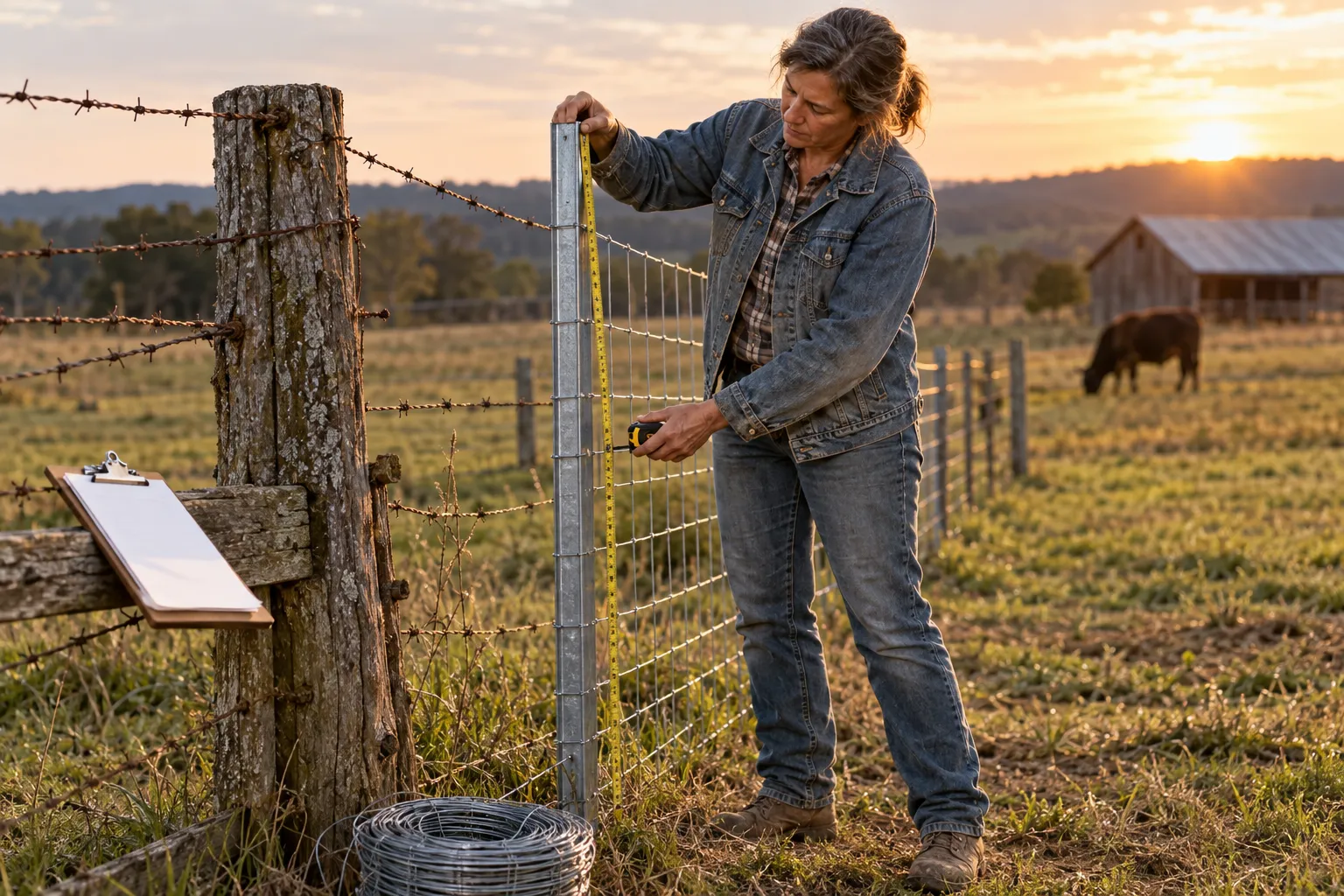
The Modified Accelerated Cost Recovery System (MACRS) assigns a recovery period and depreciation method based on property classification. For an agricultural fence, the general reference is 7-year GDS or 10-year ADS. The method and deduction timing can also depend on the convention, placed-in-service date, business use, and whether ADS applies. Publication 946 explains depreciation systems and conventions; check current requirements and the asset’s facts before filing.
GDS vs. ADS: Choosing Between 7-Year and 10-Year Recovery Periods
Publication 225 lists a 7-year GDS period for agricultural fences; ADS generally uses 10 years. ADS may be required in certain circumstances, so the shorter GDS period is not available to every taxpayer. Confirm the applicable system, classification, and business use before calculating deductions.
How Straight-Line and Declining Balance Methods Apply to Fence Costs
Recovery period and depreciation method are separate parts of a MACRS calculation. The method allocates depreciable basis over the recovery period; the convention generally determines when depreciation begins in the placed-in-service year. GDS and ADS can use different methods, and elections or statutory requirements may affect the result. Use Publication 946 and the asset details rather than assuming every fence receives the same first-year deduction.
Recovery Period Reference Table for Fences and Related Ranch Improvements
This table gives general recovery-period references for common ranch property. It is a classification aid, not a determination that a particular asset qualifies. Actual function, construction, use, and applicable depreciation system govern.
| Asset or category | General recovery-period reference | Classification point |
|---|---|---|
| Agricultural fence | 7-year GDS; 10-year ADS | Confirm farming-business use and identify separately classified components. |
| Qualifying single-purpose livestock structure | 10-year GDS reference | Strict design, construction, and exclusive-use requirements apply. |
| General-purpose farm building | Generally 20-year GDS reference | Consider actual use, including residential, personal, rental, or nonfarm portions. |
| Depreciable farming or livestock water well | 15-year GDS; 20-year ADS | Review the well and separately identifiable pumps, piping, tanks, and electrical components. |
| Drainage, roads, paved lots, and similar site improvements | Generally 15-year GDS reference | Determine whether the item is a distinct improvement or part of another asset. |
Separately Identifiable Components: Gates, Bracing, and Foundations
Gates and other separately identifiable components may require review apart from the fence line. Bracing, foundations, or related work should not automatically inherit the fence’s classification if their function or construction points to different treatment. Keep invoices and project descriptions showing what was installed and how it serves the operation. For integrated systems, assess the system and identifiable components under the applicable rules.
Section 179 and Bonus Depreciation on Farm Fencing: Current Rules and Limits
A fence used in a farming business may be considered for Section 179 or bonus depreciation, but classification alone does not guarantee either deduction. The taxpayer must meet the selected provision’s rules, establish business use and basis, and consider whether the deduction can be used in the current year. Publication 946 explains depreciation rules, while the Internal Revenue Code governs eligibility and limits. Check current law and the fence’s acquisition and placed-in-service details before making an election.
Does Fencing Qualify for Section 179? Business-Use and Taxable-Income Tests
A farm fence may qualify for Section 179 when it is eligible depreciable property used in the active conduct of a trade or business. Personal-use fencing does not qualify on that basis, and mixed use requires an appropriate business-use allocation. Section 179 is also subject to a taxable-income limit: generally, the deduction cannot exceed taxable income from the active conduct of trades or businesses, with separate carryover rules.
Verify these tax-year-specific amounts against current IRS authority before filing. Total qualifying property purchases, business income, and other eligibility rules may affect the result.
Bonus Depreciation Under Section 168(k) for Property Acquired After January 19, 2025
Under the supplied current-law baseline, qualified property acquired after January 19, 2025, generally may receive a 100% additional first-year depreciation deduction under Section 168(k). Eligibility is not automatic: each fence must meet the statute’s property, acquisition, placed-in-service, and business-use requirements. A taxpayer may elect out for a class of property. Notice 2026-11 provides interim guidance, and Publication 946 discusses depreciation rules. Check applicable provisions and transition rules close to filing.
Step-by-Step: Calculating First-Year Deductions With Assumptions Stated
Assume the fence qualifies for the selected deduction, the business has sufficient taxable income for Section 179, and no other limitation changes the result. This comparison does not establish eligibility for a particular taxpayer.
- Establish basis: Confirm the documented fence cost and allocable installation costs.
- Verify business use: Identify any personal or nonbusiness portion and exclude it from business basis.
- Check eligibility and limits: Review Section 179 requirements and available taxable income, or verify Section 168(k) conditions and any class election.
- The actual deduction may differ.
Planning Tradeoffs
Potential advantages
- May accelerate depreciation compared with deductions spread over the recovery period.
- Can align a capital project with a year when eligible business deductions are usable.
Limitations
- Eligibility, elections, taxable income, and business use can restrict the deduction.
- Accelerated deductions may affect later depreciation and taxable gain on disposition.
What Fencing May Not Qualify: Personal Use, Hobby, and Pre-2025 Phase-Down Scenarios
Fencing for a residence, recreational area, or other personal use generally is not depreciable as a farming-business asset. An activity that does not qualify as a trade or business may also fail relevant requirements. Property acquired before January 20, 2025, is not automatically eligible for the current 100% bonus rate; the applicable phase-down percentage depends on the law for the acquisition and placed-in-service year. Keep historical rules separate from current acquisition guidance.
Repairs vs. Improvements, Purchase Allocations, and Look-Back Opportunities
Begin by identifying whether work maintains an existing fence or creates or improves a capital asset. A farm purchase also needs a supportable allocation among land, buildings, fences, and other improvements. For previously owned property, a depreciation-schedule review may identify an omitted asset or incorrect method. Invoices, purchase documents, and property records support these distinct analyses.
When Fence Replacement Is a Currently Deductible Repair and When It Must Be Capitalized
Routine work that keeps a fence in ordinarily efficient operating condition may receive different treatment from work that betters the property, restores a major component, or adapts it to a new use. Replacing a limited section with comparable materials may be maintenance, depending on the facts. A substantially new fence, expanded fenced area, or changed function may require capitalization and depreciation. Apply the tangible-property rules to the work, not just an invoice labelled “repair.”
Where practical, separate labor and materials by project. Document the fence line, its prior condition, the project’s purpose, and whether the work restored or materially changed the asset. If a project includes repairs and capital improvements, evaluate and record each part separately.
Allocating Purchase Price to Fencing When Buying a Farm
Land is not depreciable, so a farm purchase price should not be assigned wholesale to depreciable property. Allocate supportable values to land, residence, buildings, fencing, and other identifiable assets. Property condition, closing documents, appraisals, construction records, and a physical inventory may inform the analysis. Do not rely on a standard percentage or assign every improvement the same recovery period.
The land is not depreciable, and the residence generally is not depreciable unless used in the business or rented. These assumptions are hypothetical and do not represent typical allocation percentages or a tax conclusion.
Look-Back Cost Segregation and Form 3115 for Previously Missed Fence Depreciation
If a fence was omitted from depreciation or treated under an incorrect method, a look-back review may identify an accounting-method issue. In applicable cases, Form 3115 may request a method change and calculate a Section 481(a) adjustment. If the taxpayer qualifies for an applicable automatic change and follows current procedures, a favorable adjustment for depreciation allowable but not previously claimed is generally included in full in the year of change. Filing history, basis support, the applicable procedure, and deduction usability matter; amended returns are not automatically the correct route.
Historical bonus depreciation follows the rules for the property’s original acquisition and placed-in-service year. A look-back does not give a previously placed-in-service fence the current bonus rate. Review the law and change procedures for the relevant year before determining whether a catch-up is available.
Planning Considerations: Deduction Timing, Usability, and Recapture on Sale
An accelerated deduction changes timing and may not reduce total tax over the full ownership period. The ability to use it can depend on taxable income, business activity, and loss limitations. Depreciation may affect taxable gain and recapture on a later sale. Consider ownership plans, available deductions, and disposition together, rather than judging an election by its first-year deduction alone.
- Reconcile purchase or construction basis to invoices, closing records, and asset schedules.
- Confirm business-use percentage, placed-in-service date, recovery period, and depreciation method.
- Review Section 179 limits, bonus eligibility, elections, and deduction usability for the relevant tax year.
- Assess method-change procedures and potential recapture before a sale or change in use.
Recordkeeping, Documentation Checklist, and Common Questions

Good records connect each fence asset to its cost, location, farming purpose, and business use, and help explain its depreciation-schedule classification if the property is reviewed or sold. Distinguish fences from gates, handling facilities, roads, and other improvements rather than grouping everything under “land improvements.”
What Records Support Your Fence Classification: Invoices, Maps, Specifications, and Use Records
Keep contractor invoices, payment records, contracts, and material and labor descriptions. A property map or marked aerial image can show fence lines, gates, pastures, and the areas they serve. Specifications, photographs, and work orders document construction and later changes. Also record how each section supports the farming operation and whether any portion serves personal or nonbusiness use. Publication 225 lists agricultural fences as 7-year GDS property and 10-year ADS property; records should support the farming classification.
Documentation and Review Checklist for Your Depreciation Schedule
Review the schedule annually and when significant assets are acquired, built, sold, converted to personal use, leased, or changed in use. Check basis against invoices or a supportable purchase allocation, document the placed-in-service date, and keep business-use details current. Identify separately described components and retain the tax return and depreciation records supporting the treatment.
- Match each fence entry to invoices, maps, and project records.
- Confirm business use, basis, placed-in-service date, and depreciation method.
- Record repairs, replacements, expansions, sales, and changes in use.
- Check whether deductions are usable and consider possible disposition effects.
Common Questions About Recovery Periods, Expensing, and Sale
Is farm fencing 7-year or 15-year property? Publication 225 lists agricultural fences as 7-year GDS property or 10-year ADS property. The 15-year reference generally applies to different categories, such as drainage facilities, not agricultural fences solely because they are outdoors.
Can a farm fence qualify for Section 179 or bonus depreciation? It may if the property and taxpayer meet applicable requirements. For qualified property acquired after January 19, 2025, current law generally allows 100% bonus depreciation under Section 168(k), subject to statutory limitations. Eligibility and deduction usability require a year-specific review.
Can depreciation affect a sale? It may affect taxable gain and recapture. Allocation of sale proceeds among land, fencing, buildings, and other assets can matter.
Next Step: Reviewing Your Ranch Depreciation Plan With a Tax Advisor
Bring the depreciation schedule, purchase and construction records, maps, and business-use details to your tax advisor. A coordinated review can identify documentation gaps and assess classification, deduction timing, and disposition considerations. Tax law and individual facts matter; this guide is educational, not tax advice.
Frequently Asked Questions
Is fencing on a farm depreciable?
Fencing used in a farming business may be depreciable, but classification depends on business use and function, not location. IRS Publication 225 lists agricultural fences as 7-year property under the General Depreciation System (GDS) and generally 10 years under the Alternative Depreciation System (ADS). A fence does not become a business asset merely because it stands on farmland.
Why is a farm fence not a 15-year land improvement?
Farm fence classification follows the fence’s function and applicable rules, not a broad label like land improvement. IRS Publication 225 identifies agricultural fences as 7-year GDS property, while the 15-year category generally applies to drainage facilities and certain roads or paved areas. Review each ranch asset separately rather than assuming a shared recovery period.
What depreciation method applies to agricultural fencing under MACRS?
MACRS assigns agricultural fencing a recovery period and a depreciation method based on the property’s classification, generally 7-year GDS or 10-year ADS. The deduction timing also depends on the convention, the placed-in-service date, business use, and whether ADS is required. IRS Publication 946 explains the systems and conventions before you calculate the deduction.
How do GDS and ADS differ for farm fence depreciation?
GDS generally provides a 7-year recovery period for qualifying agricultural fences, while ADS generally uses 10 years. ADS may be required in certain circumstances, so the shorter GDS period is not available to every taxpayer. Confirm the applicable system, classification, and business use before calculating deductions.
How should gates, bracing, and foundations tied to a farm fence be classified?
Separately identifiable components such as gates, bracing, and foundations may require review apart from the fence line. Classification should reflect each component’s actual function, construction, and use, and depreciation records should identify the fence’s location, farming purpose, and business-use share. Component-level documentation supports the treatment reported.
How often should farm depreciation schedules be reviewed?
Depreciation schedules should be reviewed annually and whenever significant assets are acquired, built, sold, converted to personal use, leased, or changed in use. Each ranch asset, including fences, wells, and barns, may carry a different recovery period based on what it actually does. Fact-specific records keep classifications current.
What related ranch assets have different recovery periods from fencing?
Depreciable water wells used in farming or livestock operations are generally 15-year GDS property (20-year ADS), drainage facilities are generally 15-year GDS property, and general-purpose farm buildings are generally 20-year property. Qualifying single-purpose livestock structures may have a 10-year recovery period under Section 168(i)(13). Earthen stock tanks, ponds, and similar land shaping may be nondepreciable or warrant evaluation under Section 175, depending on the facts.